




Geopolitics and Security
The Achilles’ Heel of Defense
Why Romania’s deterrent capability now hinges on a new approach to talent?
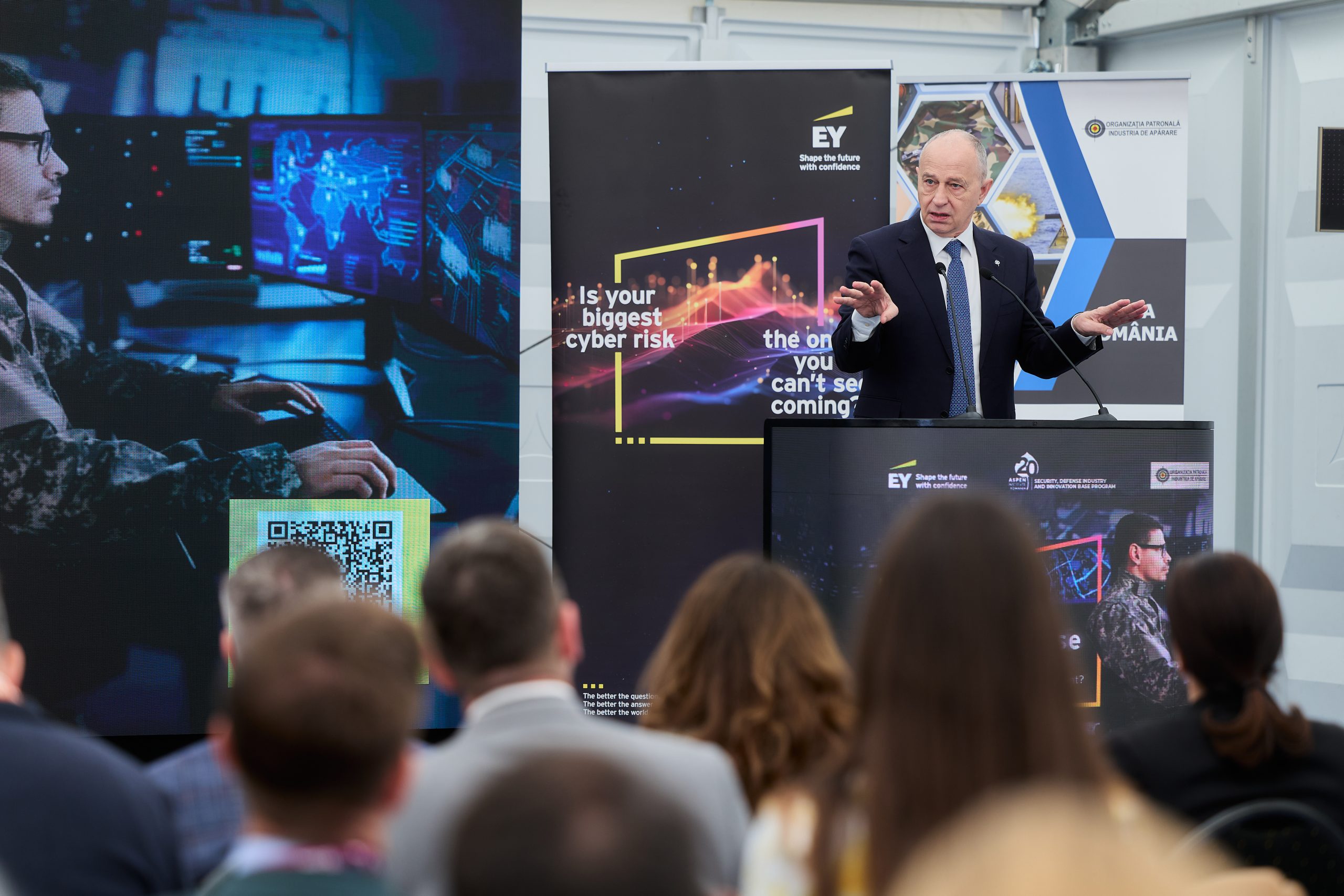
Hosted by EY Romania and Aspen Institute Romania during BSDA 2026, the event focused on the critical role of talent and workforce development in strengthening Romania’s defense capabilities. Leaders from government, industry, and academia discussed skills gaps, defence innovation, cyber and AI readiness, and the importance of collaboration between the public and private sectors.
Agenda
14 May 2026
10:00 – 10:15 Opening Remarks
Welcome on behalf of EY Romania & Aspen Institute Romania. Framing the session: why Romania’s defense posture ultimately depends on people, not only on technology.
Bogdan Ion, Country Managing Partner, EY Romania & Moldova
Mircea Geoana, President, Aspen Institute Romania
10:15 – 10:45 Setting the stage
Laurentiu Dinu, Ministerul Economiei, digitalizarii, antreprenoriatului si turismului
Sorin-Dan Moldovan, Secretar de stat si Sef al Departamentului pentru politica de aparare, planificare si relatii internationale
His Excellency, Giles Matthew Portman, UK Ambassador
10:45 – 11:05 Fireside chat: The Achilles’ Heel of Defence
Setting the strategic scene. From Romania’s ~2.4% of GDP defence commitment for 2026 to the workforce and skills gaps that could determine whether Romania and the Eastern Flank can generate, sustain and fight with the capabilities being acquired.
Idris Memon – UK and EMEIA Defence Leader, EY
Alasdair Pennycook – Head of UK MoD Secretariat (ret)
11:05 – 11:50 Panel Discussion
Hardware is operationally useless without the right people: Romania’s talent imperative for a credible deterrent
Moderated conversation exploring four core questions:
• Is the Romanian and NATO EasternFlank talent challenge a capability risk today, not just tomorrow?
• How does Romania move beyond a paybased ‘war for talent’ toward a more flexible, skills-based model?
• What does a ‘whole-of-Defence’ and ‘whole-of-nation’ partnership between MApN, industry and academia look like in practice?
• Interoperability of talent across NATO allies: where are the barriers, and where are the quick wins?
Razvan Pircalabescu, Director General, Romarm
Anca Tinca, Secretar de Stat, Ministerul Afacerilor Externe
Mihai Jurca, Șeful Cancelariei Primului-Ministru
Cristina Dragomirescu, Vicepresident of the Romanian Agency for Technological and Industrial Cooperation for Security and Defense
Cristian Sfichi, General Director THALES Romania
Andrei-Răzvan Lupu, Consilier de stat
Marius Cara, Head of EIB Group Office in Romania
Conf. univ. Col Andi Mihai Bancila, Military Technical Academy Ferdinand I
Catalina Dodu, Partner, EY Romania
Moderator: Alina Inayeh, Aspen Institute Romania
11:50 – 12:00 Interactive Q&A with the Audience
Structured dialogue with participants. Questions on policy levers, industrial partnerships and talent pipelines.
12:00 – 13:00 Networking Reception
Key Themes for Discussion
• Talent as a capability risk — why workforce gaps, not budget, may now be the binding constraint on Romania’s deterrent.
• Beyond a ‘war for pay’ — flexible, skills-based models that let talent flow between the military, industry and the civilian economy.
• A whole-of-Defence, whole-of-nation approach — aligning MApN, industry primes, SMEs, universities and technical high schools around a shared skills demand signal.
• Dual-use, cyber and digital skills — preparing Romania for multi-domain operations and AI-enabled defence.
• Interoperability of talent across NATO — how Romania contributes to, and benefits from, allied talent pipelines.
• Reserves, veterans and the citizen-soldier — mobilising the wider national resilience pool.